
Your cart is empty.

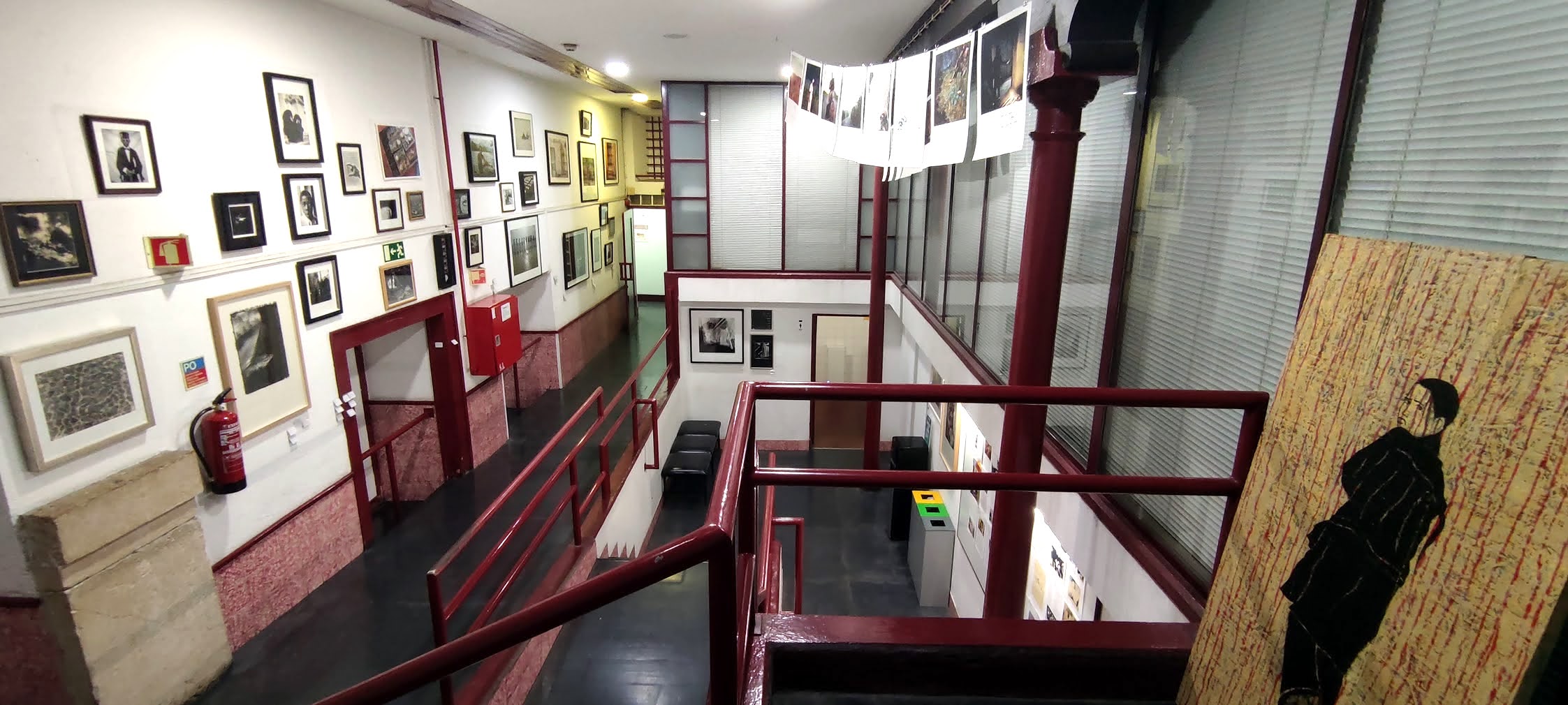
Perve Galeria is honoured to present the exhibition "Crossing borders: dialogue of collections", developed in partnership by Coletivo Multimédia Perve and Ispa - Instituto Universitário, which aims to establish a dialogue between the art collections, dedicated to Portuguese-speaking artists, of these two institutions based for several decades in Alfama. Aiming to cover a temporal universe of one century of artistic production, from the beginning of the 20th century to the present day, this exhibition is a fundamental moment for the understanding of modern and contemporary art in Lusophony. It will be open between May 24th and August 25th 2023.
Crossing Borders: A Dialogue Between Collections
May 24 - August 25
June and July Mon - Fri: 8am - 11pm, Sat: 9am - 6pm
August Mon - Fri: 8am - 8pm*
*during the last two weeks of August, Closing time is at 6pm
Synopsis
Developed in partnership by Colectivo Multimédia Perve and Ispa - Instituto Universitário, this exhibition seeks to establish a dialogue between the art collections, dedicated to Portuguese-speaking artists, of these two institutions installed for several decades in Alfama.
Celebrating 25 years since its foundation, the Lusophonies Collection was started in 1998 by Carlos Cabral Nunes, who curates the exhibitions of the collection, and Nuno Espinho da Silva, both founding members of Colectivo Multimédia Perve.
Aiming to cover a temporal universe of one century of artistic production, from the beginning of the twentieth century to the present day, in the context of Portuguese-speaking artists living in their countries of origin, expatriates living in Portuguese-speaking territories, and Portuguese-speaking artists in the diaspora, the Lusophonies Collection aims, fundamentally, to give visibility to authors to whom the art market, museology and art history have not yet paid, for various reasons, the attention that is due to them, either in their time or today. By understanding the time span of a century of artistic production, which tends to expand, the exhibition aims to correct what is considered to be an error of analysis regarding the importance of these authors and their respective artistic practices, especially by analyzing the African influence (or matrix) evident in the works incorporated.
The exhibition also marks the 60th anniversary of Ispa, which, with a particular focus on understanding the human mind and its creative processes, has been promoting, since the mid-1990s, the intersection of art and science through temporary exhibitions of visual arts. These have allowed the constitution of a collection that is now presented for the first time under a curatorial project that aims to highlight the bridges between the artworks that comprise it and the comprehensive concept of artistic creation in the Portuguese language.
Under the aegis of the centenary of the birth of one of the greatest personalities of surrealism and the history of art in Portugal, Mário Cesariny de Vasconcelos (1923-2006), and also to mark the 10th anniversary of Freedom’s House - Mário Cesariny, this exhibition provides the opportunity to view artworks that are normally hidden from the public eye. The exhibition is organized around three central historical clusters, which provide a synthetic, chronological framework for modern and contemporary artistic production in the vast Portuguese-speaking world.
"Authoritarianism, Doctrine and Resistance" gives visibility to the artists who, before the 25th of April 1974 and the independence of the African Portuguese-Speaking Countries, between 1974 and 1975, began their artistic career and asserted themselves. The artworks included in this period reflect the predominance of a tendency to use art as a revolutionary discourse and as a means of political and social vindication, both in countries that lived under colonialism and in Portugal, where a dictatorship was in place.
"The Emergence of Democracies" includes works marked by the processes of independence, with the installation of sovereign regimes and the affirmation of a proper and unique identity in the various Lusophone countries. Also in Portugal, the freedom that followed decades of repression was particularly felt in the artistic development.
"Futures, Miscegenation and Diaspora" seeks to present the artistic production developed, more particularly, after Portugal's accession to the European Union in 1986, and after the periods of civil war in some of the Portuguese-speaking African countries, namely Mozambique and Angola, up to the present day. This nucleus includes not only works by authors living in their countries of origin, but also those who develop their production in the diaspora.
These three clusters are clearly defined, dividing the space in the Galeria Malangatana and Galeria Mário Casimiro, which respectively mark the beginning and the end of the exhibition, and in a freer manner in the other exhibition areas, from the front of the building, through the library, to the third floor.
In a journey that allows for the discovery of a wide range of artworks, the exhibition seeks to contribute to the constitution of territories of integration and inclusion, questioning the way in which the African influence was, and continues to be, decisive for the affirmation of a specific vocabulary of creative processes. Narratives are established in the richness of artistic and cultural diversity, in the sensitivity expressed by the singular and collective paths perceived, mirroring the historical reality of the countries from which the artists represented come from.
With works by Bertina Lopes, Cruzeiro Seixas, Ernesto Shikhani, Fernando Lemos, Isabel Meyrelles, Malangatana Ngwenya, Manuel Figueira, Manuela Jardim, Mário Cesariny, Pancho Guedes, Reinata Sadimba, Rosa Ramalho, Teresa Balté, among many others, modern and contemporary artistic production from the Portuguese-speaking world, with an African flair, spreads through the multiple spaces of Ispa, which is thus consolidated as a true house of Art, Culture and Thought.
REPRESENTED ARTISTS
Abraão Vicente, Agostinho Santos, Ai Wei Wei, Alberto Chissano, Alberto Pimenta, Albino Moura, Aldina, Alex da Silva, Alfredo Luz, Ana Hatherly, Ana Silva, António José Forte, António Paulo Tomáz, António Quadros, António Ramalho, Areal, Artur Bual, Bela Duarte, Benjamin Marques, Bertina Lopes, Borderlovers, Branislav Mihajlovic, Cabral Nunes, Carlos Calvet, Carlos Zíngaro, Claude Yersin, Cruzeiro Seixas, Dorindo Carvalho, Dorita de Castel Branco, E.M. de Melo e Castro, Edson Chagas, Eduardo Gageiro, Eduardo Nery, Ernesto Shikhani, Eurico Gonçalves, Evandro Carlos Jardim, Evelina Oliveira, Fernando Aguiar, Fernando Azevedo, Fernando Grade, Fernando Lemos, Fernando Roza de Oliveira, Figueiredo Sobral, Francisco Carvalho Rêgo, Francisco Relógio, Franck Lundangi, Gabriel Garcia, Gil Teixeira Lopes, Gracinda de Sousa, Hansi Staël, Hein Semke, Henrique Risques Pereira, Henrique Vaz Duarte, Ídasse, Inácio Matsinhe, Isabel Meyrelles, Isabella Carvalho, Ivan da Silva-Bruhns, Ivan Villalobos, Ivo Bassanti, Jayme Reis, João Ayres, João Donato, João Garcia Miguel, João Ribeiro, João Rodrigues, Jordi Burch, Jorge Barradas, Jorge Vieira, José Cabral, José Chambel, José Eduardo Agualusa, José Escada, Júlio Pomar, Júlio Resende, Leonel Moura, Lizette Chirrime, Lourdes Castro, Lud, Luisa Queirós, Malangatana Ngwenya, Mankew Mahumana, Manuel Cargaleiro, Manuel Figueira, Manuel Vieira, Manuela Jardim, Mapfara, Marcelo Grassmann, Márcia Matonse, Marco Brás, Mário Botas, Mário Cesariny, Martins Correia, MarYserra, Natália Correia, Ondjaki, Palolo, Pancho Guedes, Paulo Kapela, Paulo Teixeira Pinto, Pepe Diniz, Raquel Rocha, Raúl Perez, Regina Costa, Regina Frank, Reinata Sadimba, Ricardo Casimiro, Ricardo Coxixo, Ricardo Rangel, Rico Sequeira, Roberto Chichorro, Rodrigo Bettencourt da Câmara, Rosa Ramalho, Rui Gaudêncio, Rui Simões, Samuel Muankongue, Sara Maia, Sérgio Guerra, Sérgio Santimano, Silvia Schiermacher, Sónia Aniceto, Sonia Delaunay, Subodh Kerkar, Suekí, Tchalé Figueira, Teresa Balté, Teresa Roza d'Oliveira, Tomo, Tsenane, Valdemar Dória, Valter Hugo Mãe, Victor Belém, Vitor Pi, Vítor Rua, Xana.
Download - Cruzar fronteiras: diálogo de coleções